Key Takeaways
- Follow your vehicle manufacturer’s recommended maintenance schedule to keep essential systems operating properly.
- Check tire pressure, tread, brakes, fluids, and lights regularly to identify potential problems early.
- Change engine oil and replace filters at the recommended intervals based on your vehicle and driving conditions.
- Pay attention to warning signs such as unusual noises, vibrations, leaks, overheating, or dashboard warning lights.
- Maintain the battery, cooling system, belts, hoses, suspension, and steering components through regular inspections.
- Older and higher-mileage vehicles may need more frequent attention as components experience age-related wear.
- Keep detailed maintenance records and address minor problems promptly to help prevent costly repairs and unexpected breakdowns.
Keeping a car safe and reliable takes more than filling the fuel tank and washing it regularly. Every vehicle depends on routine maintenance to keep its engine, brakes, tires, fluids, electrical components, and other systems working properly. Some maintenance tasks need to be performed frequently, while others are recommended based on mileage, driving conditions, or the vehicle’s age. Following a consistent maintenance schedule can help prevent unexpected breakdowns, improve driving performance, and reduce the risk of expensive repairs.
Whether you drive to work every day or only use your vehicle occasionally, understanding the basic maintenance your car needs can help keep it dependable for years to come.
Why Is Regular Car Maintenance Important?
Regular maintenance helps a vehicle perform as the manufacturer intended. Cars contain hundreds of moving and electrical components, and many of them experience wear every time the vehicle is driven. Small problems can gradually become larger issues when they are ignored. For example, an underinflated tire can wear unevenly, while old engine oil may provide less effective lubrication. Addressing these issues early can help protect major components and reduce the likelihood of sudden failures.
Regular servicing also gives technicians an opportunity to identify problems that may not yet be obvious to the driver. In the long run, preventive maintenance can support safety, reliability, performance, and ownership costs.
Routine maintenance can help you:
- Prevent unexpected breakdowns: Regular inspections can identify worn or damaged components before they fail.
- Protect important systems: Proper fluids, filters, and replacement parts help components operate correctly.
- Improve safety: Brakes, tires, lights, steering, and suspension all affect how safely a vehicle operates.
- Reduce repair costs: Fixing a small problem is often less expensive than repairing damage caused by neglect.
- Maintain vehicle performance: A properly serviced vehicle can deliver smoother operation and more consistent performance.
- Preserve resale value: A documented maintenance history can make a well-cared-for vehicle more attractive to potential buyers.
Which Maintenance Tasks Should You Do Regularly?
Different vehicles have different maintenance schedules, but some basic checks apply to nearly every car. Routine maintenance is not limited to taking the vehicle to a repair shop. Drivers can also perform simple inspections between professional service appointments. Checking tire pressure, looking at fluid levels, listening for unusual sounds, and paying attention to warning lights can help you notice changes in your vehicle’s condition.
More complex work, such as brake inspections or engine diagnostics, should generally be handled by a qualified technician. Knowing which tasks should happen regularly makes it easier to follow a maintenance routine instead of waiting until something goes wrong.
Here are some of the most important routine tasks to keep track of:
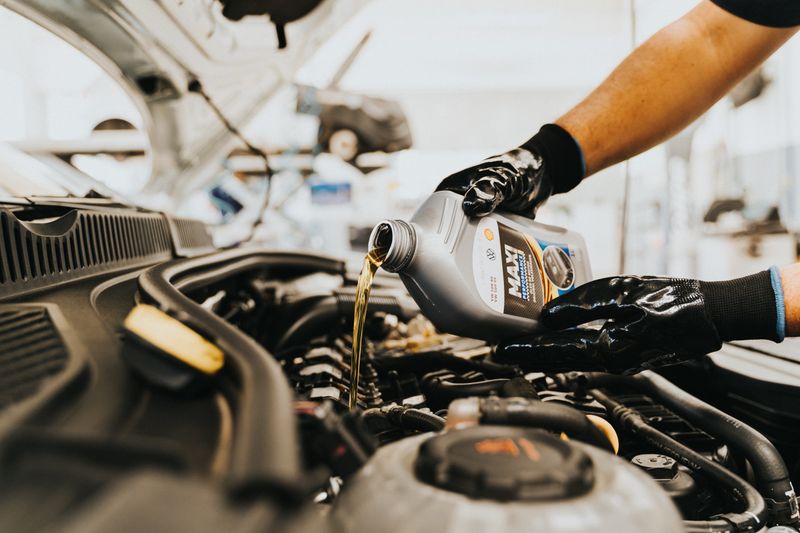
Check Engine Oil
Engine oil lubricates internal engine components and helps reduce friction and heat. Over time, oil becomes contaminated and loses some of its effectiveness. Follow the vehicle manufacturer’s recommended oil type and change interval.
Checking the oil level periodically is also useful, especially before long trips. If the oil level repeatedly drops between changes, the vehicle may have a leak or another mechanical issue that should be inspected.
Inspect and Rotate the Tires
Tires are the vehicle’s main point of contact with the road, making their condition especially important. Check tire pressure regularly and adjust it according to the manufacturer’s recommended specifications.
Tire rotation can promote more even tread wear. During inspections, look for cracks, bulges, punctures, uneven wear, or tread that has become excessively worn.
Check Fluid Levels
Several fluids help keep a vehicle’s systems operating correctly. Depending on the vehicle, these may include engine coolant, brake fluid, transmission fluid, power steering fluid, and windshield washer fluid.
Fluid levels that are consistently low can indicate leaks or other problems. Do not simply keep adding fluid without investigating why the level is dropping.
Replace Filters When Needed
Air and cabin filters can become clogged over time. A dirty engine air filter may restrict airflow, while a clogged cabin filter can reduce airflow through the vehicle’s ventilation system.
Replacement intervals vary by vehicle and driving conditions, so check the owner’s manual rather than relying on a universal schedule.
How Often Should You Change the Oil?
Oil changes are among the most familiar vehicle maintenance tasks, but the correct interval depends on the vehicle, oil type, driving conditions, and manufacturer’s recommendations. Modern vehicles may use different oil formulations and maintenance intervals than older cars. Some newer models also use maintenance monitoring systems that calculate service intervals based on driving conditions. Instead of automatically following a generic three-month or fixed-mileage rule, consult the owner’s manual and follow the schedule specified for your particular vehicle.
If you frequently drive in heavy traffic, extreme temperatures, dusty environments, or other demanding conditions, your vehicle may require more frequent service.
When checking your oil maintenance schedule, consider:
- The recommended oil grade and specification.
- The mileage or time interval specified by the manufacturer.
- Whether your vehicle has a maintenance reminder system.
- Your typical driving conditions.
- Whether you notice oil leaks, unusual engine noises, or changes in oil consumption.
Changing the oil at the recommended interval helps ensure that the engine receives the lubrication it needs. However, an oil change should not replace other scheduled maintenance.
When Should You Inspect the Brakes?
Brake maintenance is essential because the braking system directly affects your ability to slow down and stop. Brake components gradually wear during normal driving, and their condition can depend on factors such as driving habits, traffic conditions, vehicle weight, and terrain. Stop-and-go city driving can place different demands on brakes than highway driving. Because brake wear is not always obvious from the driver’s seat, periodic professional inspections are important.
A vehicle may still appear to brake normally even when brake pads, rotors, brake fluid, or other components are approaching the point where service is needed.
Pay attention to warning signs such as:
- Squealing or grinding: Unusual brake sounds can indicate worn or damaged components.
- Vibration while braking: Shaking or pulsation may indicate a problem that requires inspection.
- A soft brake pedal: A pedal that feels unusually soft or spongy should be checked promptly.
- Longer stopping distances: Changes in braking performance should never be ignored.
- Pulling to one side: Uneven braking or other mechanical problems can cause the vehicle to pull when stopping.
- Brake warning lights: Dashboard warnings should be investigated rather than dismissed.
If braking performance changes suddenly, have the vehicle inspected as soon as possible.
What Should You Know About Battery and Electrical Maintenance?
A vehicle’s battery provides the electrical power needed to start the engine and support numerous electrical systems. Modern cars depend on increasingly complex electrical components, making battery and charging-system health important for reliability. Batteries also have a limited service life, although their actual lifespan can vary depending on climate, vehicle usage, battery type, and maintenance.
Corrosion around terminals, difficulty starting the engine, dim lights, or repeated electrical problems can indicate that the battery or charging system needs attention. A professional inspection can determine whether the problem involves the battery, alternator, starter, wiring, or another component.
Good battery care includes:
- Inspecting terminals for corrosion or buildup.
- Making sure connections are secure.
- Checking for signs of swelling, cracks, or physical damage.
- Having the battery tested when starting becomes noticeably slower.
- Checking the charging system if electrical problems continue.
- Replacing the battery according to its condition and vehicle requirements.
If a vehicle will sit unused for an extended period, ask a qualified professional about appropriate battery-maintenance practices.
How Important Are Tires and Wheel Alignment?
Tires influence acceleration, steering, braking, handling, and overall road contact. Even a mechanically sound car can become less safe when its tires are worn, damaged, or improperly inflated. Tire pressure can change with temperature and normal air loss, so it should be checked regularly rather than only before long journeys. Wheel alignment also matters because incorrect alignment can cause uneven tread wear and affect handling.
If your vehicle pulls to one side, the steering wheel is off-center while driving straight, or your tires wear unevenly, have the wheels and suspension inspected.
A basic tire check should include:
- Tire pressure: Use the recommended pressure listed by the vehicle manufacturer.
- Tread condition: Look for excessive wear and make sure sufficient tread remains.
- Physical damage: Inspect for cuts, punctures, cracks, and bulges.
- Wear patterns: Uneven wear can point to alignment, suspension, or inflation problems.
- Spare tire: Make sure the spare is present and properly inflated if your vehicle is equipped with one.
Proper tire care is one of the simplest ways to support dependable vehicle operation.
Does the Cooling System Need Regular Attention?
The cooling system prevents the engine from reaching damaging temperatures during operation. It typically includes coolant, a radiator, hoses, a thermostat, a water pump, a cooling fan, and other components. A problem with any of these parts can affect the engine’s ability to regulate temperature. Coolant should be checked and replaced according to the manufacturer’s recommended maintenance schedule.
Drivers should also watch the temperature gauge and pay attention to warning lights. An overheating engine can suffer serious damage if the vehicle continues to operate while temperatures are excessively high.
Signs of a cooling-system problem may include:
- An overheating warning or unusually high temperature reading.
- Visible coolant leaks under the vehicle.
- A sweet smell around the engine compartment.
- Low coolant levels that repeatedly return after being topped up.
- Steam or unusual heat coming from under the hood.
Never open a hot cooling system without following the manufacturer’s safety instructions. Hot coolant can cause serious burns.
What About Belts, Hoses, and Other Wear Components?
Not every maintenance problem involves an electronic warning light or obvious mechanical failure. Belts, hoses, suspension components, wiper blades, lights, and other parts can gradually deteriorate with age and use. Some parts may need replacement based on mileage or time, while others should be replaced when inspection shows signs of wear.
Following the manufacturer’s service schedule is particularly important for components that may have recommended replacement intervals. A qualified technician can also identify deterioration that is difficult for an inexperienced driver to see.
During scheduled servicing, ask about the condition of:
- Serpentine or accessory belts.
- Timing belt, if the vehicle uses one.
- Coolant and other hoses.
- Suspension and steering components.
- Windshield wipers.
- Exterior and interior lights.
- Exhaust components.
- Air-conditioning system components.
Understanding the different types of automotive care can also help vehicle owners distinguish between routine maintenance, preventive inspections, repairs, and services that become necessary because of age or mileage.
Should You Follow the Manufacturer’s Maintenance Schedule?
Yes. The owner’s manual is one of the most useful sources of information for maintaining a specific vehicle. Manufacturers develop maintenance schedules based on the vehicle’s engine, transmission, components, operating conditions, and engineering requirements. The schedule may include different services at different mileage or time intervals.
Some vehicles also distinguish between normal and severe driving conditions. Instead of relying entirely on general advice found online, use the manufacturer’s recommendations as your starting point and adjust the maintenance routine when a qualified technician identifies vehicle-specific needs.
A typical maintenance schedule may include:
Every Few Weeks
Check tire pressure, inspect tires, look at fluid levels, and make sure exterior lights are working. Drivers should also pay attention to changes in sounds, smells, vibrations, or handling.
Every Few Months
Depending on mileage and manufacturer recommendations, inspect the brakes, tires, battery, filters, fluids, and other accessible components.
At Scheduled Service Intervals
Complete manufacturer-recommended services such as oil and filter changes, inspections, fluid servicing, tire rotation, and other mileage-based maintenance.
At Major Mileage Milestones
Some vehicles require more extensive inspections or replacement of specific components at higher mileage. Check the maintenance schedule before assuming that an older vehicle only needs oil changes and basic inspections.
What Maintenance Does an Older Car Need?
Older vehicles can require more attention because components experience wear over time. Age-related deterioration can affect rubber seals, hoses, belts, suspension parts, electrical components, and other systems even when the vehicle has relatively low mileage. A higher-mileage vehicle does not automatically mean it is unreliable, but it does mean maintenance history becomes increasingly important.
Keeping detailed service records can help identify recurring problems and ensure that scheduled services are not forgotten. Owners of older cars should also pay attention to small changes in performance instead of waiting for a major breakdown.
For an older vehicle, consider monitoring:
- Oil consumption and possible leaks.
- Cooling-system performance.
- Battery and charging-system condition.
- Brake wear.
- Suspension and steering components.
- Transmission operation.
- Tire age and condition.
- Belts, hoses, seals, and other aging components.
Preventive inspections can help identify developing problems before they leave you stranded.
How Can You Create a Simple Car Maintenance Routine?
Car maintenance becomes easier when it is treated as a routine rather than an occasional emergency. You do not need to remember every service date from memory. A simple maintenance record can show when oil was changed, tires were rotated, filters were replaced, brakes were inspected, and major services were completed. Digital reminders, a notebook, or the vehicle’s maintenance monitoring system can all be useful.
The important thing is consistency. Combining regular driver checks with professional inspections gives you a practical way to keep track of the vehicle’s condition throughout the year.
A simple routine can look like this:
- Check your tires regularly.
- Monitor fluid levels and look for leaks.
- Follow the recommended oil-change schedule.
- Pay attention to warning lights and unusual vehicle behavior.
- Schedule inspections at the manufacturer’s recommended intervals.
- Keep records of completed maintenance and repairs.
- Address small problems before they become larger failures.
This approach makes vehicle care more manageable and helps you stay ahead of predictable maintenance needs.
When Should You Take Your Car to a Professional?
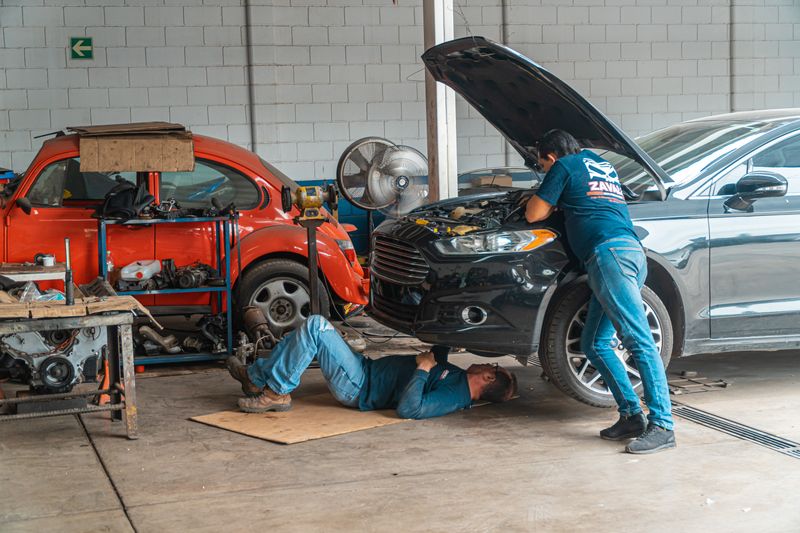
Some maintenance tasks are simple enough for owners to monitor, but more complicated problems require professional attention. Modern vehicles combine mechanical systems with sophisticated electronics, sensors, computers, and safety features. A warning light may have several possible causes, and replacing a part without identifying the underlying problem can waste time and money.
A qualified technician has the tools and knowledge to diagnose problems accurately and inspect components that may not be visible during a basic driveway check. Professional servicing is particularly important when a vehicle develops new symptoms or when a scheduled maintenance interval calls for specialized work.
Seek professional assistance when you notice:
- Persistent dashboard warning lights.
- Unusual engine, transmission, or brake noises.
- New vibrations or steering problems.
- Fluid leaks.
- Overheating.
- Difficulty starting the vehicle.
- Changes in braking performance.
- Significant changes in fuel consumption.
- Repeated problems after a recent repair.
Do not ignore a problem simply because the vehicle is still drivable. Some mechanical issues can worsen quickly and may eventually create a safety hazard or lead to a more expensive repair.
Conclusion
A safe and reliable car depends on consistent care rather than occasional repairs. Oil, tires, brakes, fluids, filters, batteries, cooling systems, belts, hoses, and other components all need attention at appropriate times. The exact schedule will vary depending on the vehicle, mileage, age, and driving conditions, so the manufacturer’s maintenance recommendations should remain your primary guide.
Good maintenance is ultimately about preventing avoidable problems. By checking your vehicle regularly, keeping accurate service records, responding to warning signs, and scheduling professional inspections when needed, you can help your car remain dependable on everyday drives and longer journeys. A few minutes of preventive attention today can make a significant difference in your vehicle’s safety, performance, and longevity.